

PRIMARY / ELEMENTARY CYCLES
The primary objective of primary school is to lay the solid foundations of fundamental learning and to promote the personal and intellectual development of the child. This first level of education is a privileged place for basic learning, socialization, development and building autonomy for all young children. Primary school must be a fertile ground for the awakening of desire and pleasure of learning, curiosity, as well as open-mindedness. It is in this context that academic success can really take root. It also ensures, in close collaboration with the family, the teaching of the civic and moral values of Kabylian society. The goal is to form an intelligent, free, loyal, open-minded and respectful citizen to others. Primary school stimulates the development of intelligence, the acquisition of essential knowledge, the formation of principles of logic, culture and art, while nourishing the intellectual, physical and sporting skills of each student. This learning process considers the individual pace of knowledge acquisition. Primary education is structured in three cycles of two years each. At the end of each cycle, students carry out individual educational projects, based on themes of their choice, which promotes the expression of their creativity and autonomy. In these cycles, a class should not have more than 25 students in order to ensure personalized education and more effective management of each child’s needs. In addition, it is preferable that the same teacher accompanies students throughout the cycle, in order to strengthen the pedagogical relationship and promote a climate of trust that is favorable to learning. It is also important that students evolve in a classroom space decorated according to their preferences, to allow them to appropriate the school environment in a positive and motivating way. Apart from linguistic subjects, all other subjects must be taught in Kabylian, the mother tongue, which not only promotes academic learning but also the preservation and promotion of our culture.
The verall educational objectives of the primary school are as follows:
- Building fundamental learning.
- Promote personal development, socialization and autonomy of students.
- Stimulate desire and pleasure of learning, as well as individual initiative.
- Transmit, in collaboration with the family, civic and moral values of Kabylian society.
- Train open-minded, loyal, free and respectful citizens to democratic principles.
- Encourage the development of intellectual skills, as well as skills in reading, writing, basic mathematics, culture, physical and sports education.
- Promote spirit of contribution to the construction of a peaceful world, based on tolerance, respect and harmony.
- Stimulate intellectual curiosity and creativity.
- Guide students’ integration towards personal success and development.
PRIMARY CYCLE: FIRST LEARNING
The first primary cycle is the logical continuation of preschool, bringing more advanced elements in a structured environment. The focus is on the fundamentals: reading, writing, logical and conceptual recognition of objects, as well as structured reasoning. Under the guidance of their teacher, students learn at their own pace to perceive, read, write, draw, count, calculate, imagine, understand phenomena and describe them. These first knowledge bases promote communication and creativity. In physical education and sports, the emphasis is on acquisition of balance and control of the body. At the same time, a structured learning of Kabylian language is offered, accompanied by an introduction to basic mathematical concepts (arithmetic, geometry, logical reasoning). From the second year, students are introduced to learning a foreign language, English, through fun and interactive activities (listening, cartoons, songs, games, short stories). This method aims to develop hearing, phonetics, and visual understanding of the English language.
SECOND PRIMARY CYCLE: DEVELOPMENT OF FUNDAMENTAL LEARNING
The second cycle marks a stage of deepening the skills acquired in the first cycle. It allows students to strengthen their reading skills, semantic understanding of Kabylian language and writing. They also deepen their mastery of numbers and arithmetic calculations. The gradual introduction of English in their learning process continues, favoring innovative teaching methods adapted to foreign language learning. This cycle also includes various activities, such as civic, artistic, scientific education, as well as educational workshops and theater for children. Students are thus led to develop their creativity and explore different forms of expression.
In summary, second cycle programs include:
- In-depth learning of Kabylian language.
- Basic mathematics: arithmetic, geometry and logical reasoning.
- Introduction to foreign languages; English from the second year and French from the fourth year.
- Teaching Kabylian values and culture, as well as civics.
- Introduction to history, geography, geology, and natural sciences.
- Physical and sports education, theater, plastic arts and introduction to ecology.
- Learning information and communication technologies (ICT), responsible and supervised use of artificial intelligence for the benefit of learning.
THIRD PRIMARY CYCLE: DEEPENING OF ELEMENTARY KNOWLEDGE
The third cycle aims to deepen and expand the knowledge acquired during previous cycles, especially in mathematics, logic, Kabylian language, science, geography, as well as in learning foreign languages, mainly English and French. This cycle also focuses on use of modern technologies in education, in order to prepare students for challenges in the digital world.
The Subjects Taught in This Cycle Include:
- Languages: Kabyle, English, French.
- Plastic arts (drawing, craft workshops).
- Theatre, poetry and music.
- Social universe: History, geography and social sciences.
- Physical education and sports.
- Science and technology.
- Elementary mathematics: arithmetic, geometry, logical reasoning.
- Simple notions of physics and chemistry.
- Troubleshooting complex problems.
INTRODUCTION OF FOREIGN LANGUAGES IN THE COMPULSORY SCHOOL PATH
Learning and mastering foreign languages is scientifically proven to be beneficial for intellectual development and open-mindedness. Learning a language is not limited to simple acquisition of its vocabulary and grammatical structures; it also opens to a deeper understanding of the culture it conveys and to a new way of thinking and communicating.
In addition to English, a mandatory second language, French and German are also introduced into the normal school curriculum. Ultimately, the goal is for each Kabylian student to be able to communicate fluently in at least three modern languages at the end of their secondary education. This approach prepares the younger generations for a harmonious interaction in a globalized world. Recall that the issue of languages has already been addressed in the section on the political foundations of the Kabylian educational system.
PRACTICE OF PHILOSOPHY AND LOGICAL REASONING IN THE SCHOOL PATH FROM PRIMARY SCHOOL IS MANDATORY
Philosophy, far from being reduced to a simple teaching of ancient thoughts, must be a living tool allowing a child to confront the major existential questions, those that contribute to forging his identity as an individual and citizen. By awakening his curiosity and cultivating his critical thinking, philosophy accompanies him in the development of autonomous and responsible reasoning, encouraging him to question the world and its place in it. The fundamental objective is not to be content with the history of the ideas of great thinkers, but to encourage children to think for themselves, to structure their thinking and to develop their logical reasoning skills. It is not a question of teaching philosophy in the traditional sense of the term, but of creating a stimulating framework in which students can engage in a real philosophical practice. This implies immersion in exercises of reflection, analysis, discussion, and curiosity. This dialogue is not intended to unilaterally “convince” those who are right, but to feed a process of search for meaning, exchange of ideas and mutual enrichment. It is by confronting ideas and questioning the evidence that students develop critical, creative and attentive thinking.
At each age, it is crucial to design adapted teaching materials, including textbooks and specific questions, based on a structured program. This program should allow students to become familiar with the various disciplines that make up philosophy – from ethics to logic, through mathematics and metaphysics. By tackling these themes from angles adapted to their level of understanding, children learn to practice rigorous reasoning, while broadening their perspective on the world. Each philosophical discipline thus brings a unique dimension that enriches their vision of reality and their ability to think in a nuanced way.
Integration of philosophy into the school curriculum should therefore not be perceived as a simple transmission of knowledge, but as a true education in thought. By stimulating students’ curiosity, encouraging them to question the world, and preparing them to make informed and ethical decisions, the teaching of philosophy becomes an essential lever to prepare them to become thoughtful, responsible and committed citizens.
Concepts, Thought, Reflection, Reasoning, Logic, Real world, Creativity, Criticism, Multidimensional knowledge, Analysis, Comparison, Ethics, Ideas, Philosophy, etc.
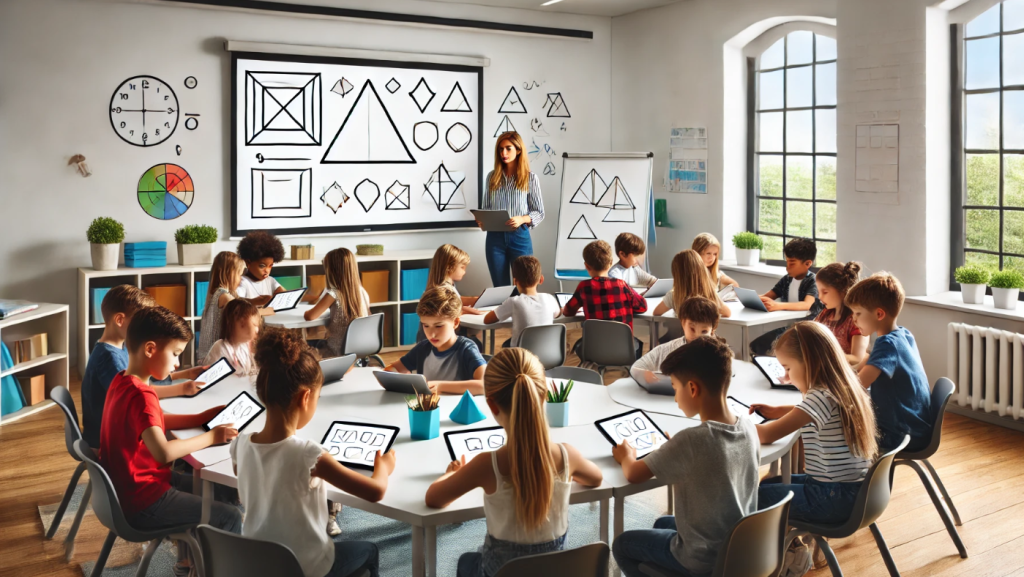
Practice and Teaching of Philosophy From Primary School
Education plays a key role in transforming society and building the future. In the modern world, where the challenges are multiple, Kabylian education must provide its citizens with necessary skills to think independently, analyze, solve problems and adapt to rapid changes. It is about training individuals who can continuously improve themselves, to be intelligent in their decisions and behave ethically in a globalized world.
Introducing philosophy from primary school will allow Kabylian children to develop their critical thinking, learn to reason and reflect on complex concepts from an early age. Philosophy, through its approach to reflection and discussion, will enrich their communication skills, their open-mindedness and their respect for different ideas and beliefs. Teaching of philosophy would be divided into levels: in primary school, it would be a matter of introducing children to reflection through discussions, debates and critical expression of ideas; in secondary school, students would begin to study history of philosophy and great intellectual figures, while honing their ability to analyze and criticize complex philosophical concepts; at post-secondary level, students would deepen their knowledge of major philosophical thoughts, while developing their own reflection and ability to defend ideas in a coherent way.
Philosophy for children, taught in a progressive and interactive way, is an essential educational practice to prepare the younger generations to become responsible, thoughtful and open citizens, capable of providing creative and informed solutions to tomorrow’s challenges.
Compulsory teaching of music, arts and philosophy in Kabylia’s schools is not only a matter of preserving our cultural heritage. It is rather an investment in the future, to allow younger generations to develop their full intellectual, creative and critical potential. These disciplines, far from being accessory, are the foundations on which a balanced education, a dynamic society and a free people rest, capable of flourishing in a modern world without denying its roots.
INTRODUCTION OF TEACHING LOGIC FROM PRIMARY SCHOOL
Logic, an ancestral discipline resulting from the reflections of Greek thinkers such as Aristotle, has gone through ages and has metamorphosed into an essential branch of modern science. Much more than a mathematical tool, it has established itself as a key to understanding in fields as varied as computer science, linguistics, philosophy and even in the decision-making processes of our daily lives. Its study makes it possible to structure thought, refine reflection and provide individuals with an ability to understand the complexities of the modern world.
Education and Logic: Forming The Minds of Tomorrow
Today, integration of logic into educational curricula is a key challenge for the global school system. From primary school, it is essential to develop this reasoning faculty in young children (spirits), in order to train citizens who are able to think independently, critically and structured. State-of-the-art education countries, such as Finland, Singapore and Japan, have already integrated formal logic teaching into their school curricula, with positive effects on students’ ability to solve complex problems and adopt rational attitudes towards every day’s challenges.
The importance of logic goes far beyond elementary school classrooms. In universities, specialized courses in logic attract students from all over the world, because this discipline extends far beyond mathematics and computer science. It also touches on philosophy, linguistics, and the social sciences, proving that the art of reasoning finds its place in all spheres of human knowledge. It thus becomes a fertile ground for the development of multidimensional critical thinking.
Logic at The Heart of Societal Challenges
Logic is not limited to abstract sciences. It is an essential weapon in the face of contemporary societal issues. In a world flooded with false information, conspiracy theories and misinformation, the ability to reason logically has become essential to discern the truth from the false. Indeed, in an era when the manipulation of facts and opinions is common, knowing how to build solid reasoning, make informed decisions and defend oneself against intellectual traps becomes a crucial skill.
Statistics reveal that individuals trained in the principles of logic are better equipped to navigate the immense ocean of information that characterizes our era propelled by artificial intelligence and social media to the size of the entire planet. A study conducted by Stanford University showed that students who took formal logic courses developed an increased ability to identify fallacious arguments and cognitive biases, essential tools for understanding and countering misinformation.
Logic for an Enlightened Kabylia Society
In this era of uncertainty, where rationality sometimes seems to be undermined, it is imperative that teaching logic become a fundamental pillar of the Kabylia education system from the early age of children. By introducing this discipline in primary school, we offer future generations keys to navigate a complex, constantly evolving world. Logic, far from being a simple academic tool, becomes a powerful lever to promote critical, enlightened and autonomous thinking, conducive to construction of a fairer, more rational and more resilient society in the face of tomorrow’s challenges.
Recommendations from World Logic Day 2024 – Application to The Kabyle School
- Strengthen teaching of logic at all educational levels: The integration of logic into school curricula, from primary school to university, is essential. This includes learning the basics of critical thinking, argumentative methods and logical analysis, essential tools for navigating a complex world.
- Promote the use of logic in governance and public policies: Governments are encouraged to adopt logical and evidence-based decision-making approaches to ensure fair and effective policies. Logic can also help overcome cognitive biases and extreme political ideologies in debates and decision-making in the construction and development of modern states.
- Encourage interdisciplinarity: Logic should not be confined to philosophy or mathematics. Its application in various disciplines such as biology, economics, sociology and ecology can open new perspectives for solving complex problems.
- Using logic to combat misinformation: Faced with proliferation of false information, it is crucial to educate Kabylian citizens on critical analysis of sources and verification of facts. Awareness campaigns and specific training must be put in place to equip individuals with logical tools necessary to evaluate information.
- Foster applied logic research: Independent Kabylia must invest in applied logic research, especially in areas such as artificial intelligence, complex systems analysis and decision-making, this can have a profound impact on innovation and sustainable development.
- Encourage dialogue between students around logic: Throughout the territory of Kabylia, in all its regions and at all schools level, it is strongly recommended to organize forums, conferences and workshops accessible at all educational levels to raise awareness of the benefits of logical thinking in solving local and global problems.
For a Kabyle Society Guided by Logic and Rationality
As we move forward in a century marked by rapid transformations and increasing uncertainties, rationality and clarity provided by logic are indispensable foundations for meeting challenges of the future. Establishing a culture of logic, both at the individual, collective and social levels, is a necessity to build a more equitable, innovative and resilient society. By learning and applying logic, we also honor the human ability to reason, adapt and thrive in a constantly changing world.
EVALUATION OF ACTIVITIES
Assessment in primary education should not be a source of pressure or stress. Evaluations are qualitative and not quantitative in nature. Students are not graded; they are rather valued according to their progress and their achievements. Assessment consists mainly of oral and written assessments, such as congratulations, encouragement, recommendations and pedagogical orientations.
Learning deficits are filled with help of adapted teaching means, and not by coercion or punishment. Students who have difficulties are accompanied in a personalized way, following the recommendations written in their school records. Thus, there is no repetition; all students move on to the following year, with enhanced monitoring according to the identified needs.
SCHOOL ORIENTATIONS AND TRANSITION TO HIGH SCHOOL
At the end of the third primary cycle, students with their parents considering their preferences, are oriented towards concentrations (branches) of secondary education. This orientation aims to choose the path best suited to each student in order to optimize its chances of academic and professional success. The goal is to ascertain that each child can flourish and realize its potential, in line with its abilities and aspirations.
School guidance is based on a set of criteria and constraints: interests of the student, recommendations of the elementary school (based on his behavior, skills and level of motivation), availability of places in nearby secondary schools, as well as possible presence of other family members (brothers, sisters, relatives) within the targeted school. These elements are crucial to ensure that the student can evolve in an environment conducive to his development.
It is essential to underscore that this orientation takes place in advance, from the transition from primary to secondary school, in order to prevent early school dropout and maximize chances of success. In a sovereign Kabylia, academic success is paramount. The country will make every effort to guarantee its children access to quality education, in order to develop their full potential and ensure their future success. Anavad is firmly convinced that the future and development of a nation is based on its human capital, and that individual youth success is the key to collective progress.
