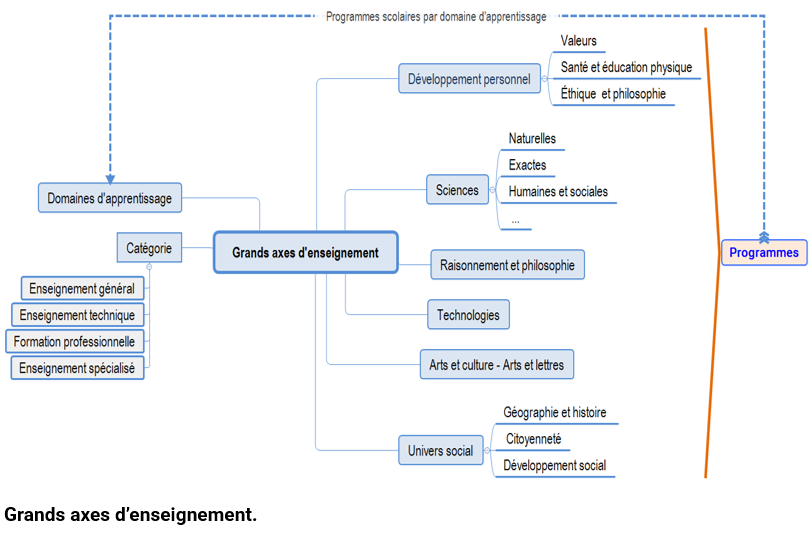
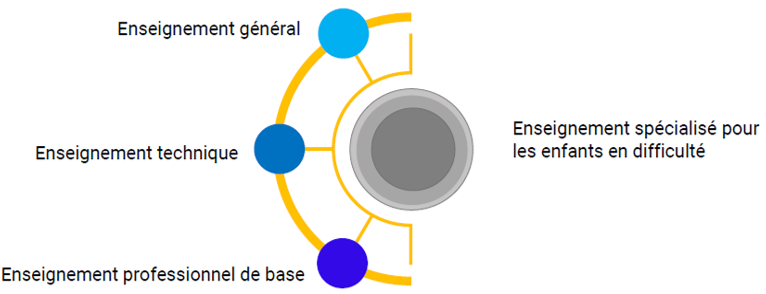
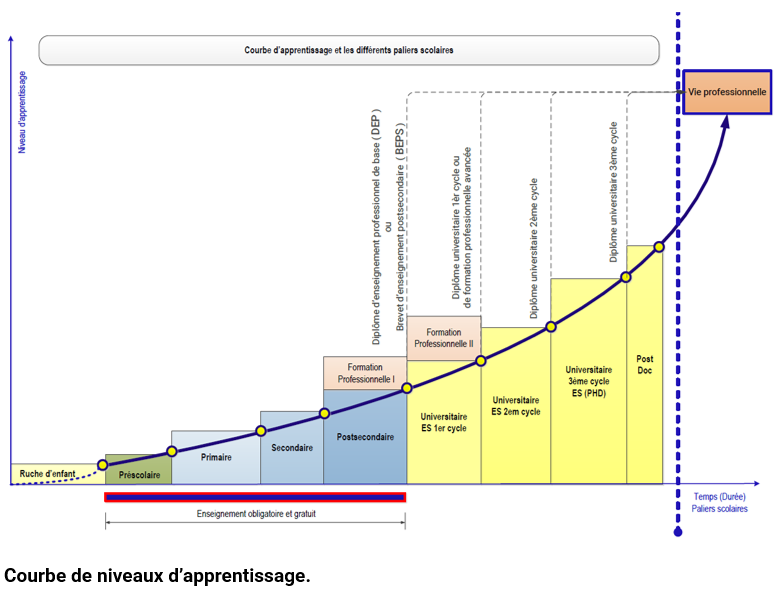
The Post-secondary education represents the last school level of the mandatory path, and is divided into three distinct categories: general education, technical education and basic vocational education. This step is crucial to preparing young people for their future, providing them with the necessary foundations to approach higher education, or specialized training and practical learning opportunities.
Basic vocational education is distinguished by its alternating approach: students take theoretical courses in the classroom while gaining practical experience within partner companies. This dual approach allows them to develop know-how directly applicable in the field, while obtaining a vocational education diploma (DEP) that opens the doors to the labor market.
Technical education, for its part, prepares students for high-tech professions and demanding specialties, combining theory and practice in specific fields. These trainings allow students to specialize in sectors of the future, giving them the necessary skills to evolve in complex professional environments.
General education is the cornerstone of preparing students for higher education. It offers them a solid foundation of theoretical and practical knowledge, essential to approach the challenges of the higher academic world with serenity and competence. By combining theoretical rigor and practical application in specific areas, this learning system allows them to specialize in sectors that correspond to their aspirations and talents. Thanks to this integrated approach, students acquire not only specialized skills, but also a global and adaptable vision, essential to evolve in the demanding environments of universities, graduate schools and major specialized schools.
The objective of this teaching is not simply to transmit knowledge, but to prepare young people to become autonomous, creative and innovative actors, capable of facing the complex challenges of a constantly changing world. Indeed, general education, in its diversity and rigor, forges individuals who not only repeat knowledge, but who learn to analyze it, apply it and adapt it to new contexts. This preparation thus allows students to distinguish themselves in university curricula, providing them with the intellectual, methodological and practical tools necessary to succeed and excel in their higher education and beyond.
General education and technical education lead to the obtaining of a Diploma of Studies Post-Secondaires (DSPS), whether general or technical, thus opening access either to higher education or to advanced vocational training. During the post-secondary period, students also benefit from a great freedom of choice in terms of elective subjects, which they select according to their passions and interests, in order to personalize their career and acquire complementary skills.
The DSPS is a key diploma that provides access to higher education institutions such as universities, graduate schools, polytechnic schools, and many others. It also paves the way for advanced vocational training, designed to provide students with the necessary skills to enter the labor market or to pursue a specialization in a particular field. Obtaining the DSPS results from the success of a rigorous post-secondary course, where academic performance is evaluated both on the basis of the results obtained throughout the year and the regional end-of-cycle exam.
The final assessment of the DSPS is based on a combined passing threshold between the general average of the last year and the average obtained in the regional examination. This exam, of a synthetic nature, evaluates all the compulsory subjects studied, offering a global vision of the knowledge acquired. The formula for calculating the average of passage is as follows:
DSPS = [70% Average of the last year] + [30% Average of the regional exam].
The average of the last year represents the general average of the results obtained during the last year of the post-secondary course, while the regional exam corresponds to a synthesis test organized at the regional level (governorate), validating the level of knowledge of the students. This regional exam is equivalent to the final exams of the European baccalaureate, and is a key indicator of the preparation of students for their academic or professional future.
Thus, the DSPS, as a transition diploma, offers students not only a recognition of their achievements, but also a real gateway to the future, allowing them to pursue high-level higher education or to integrate specialized training in line with their professional ambitions.
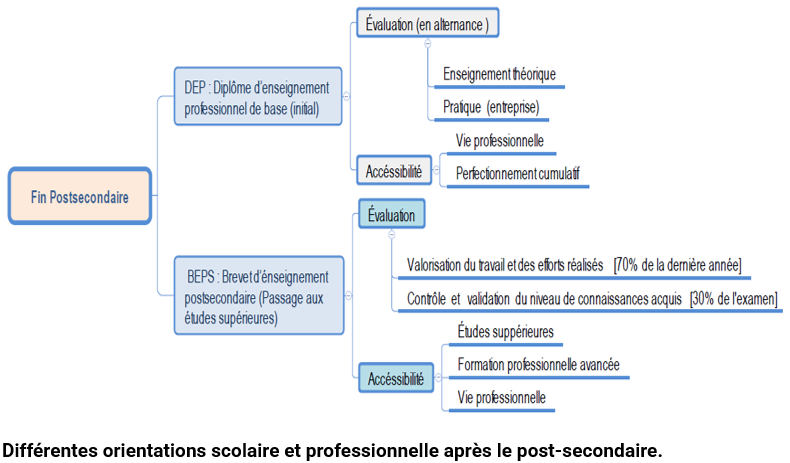
The minimum grade required to obtain the Diploma of Studies Post-Secondaires (DSPS) is 60%, a necessary condition to validate the diploma.
The DSPS allows access to all forms of higher education institutions, according to the conditions and admission criteria specific to each sector (specialty) and institution. This diploma thus constitutes a gateway to university studies, graduate schools, polytechnic schools, or specialized training, depending on the choices and ambitions of the students.
The DSPS exam is an officially recognized test at the federal level, although the exams themselves are organized at the regional level. Students from the same region simultaneously take the theoretical exam, depending on their specialty. As mentioned earlier, the DSPS final score is calculated by combining 70% of the school year average and 30% of the regional exam average, thus providing a comprehensive assessment of students’ achievements.
In general, under normal conditions, students complete their post-secondary course around the age of 17 and obtain either the general or technical DSPS or the Diploma of Professional Studies (DEP). For students who have not reached the average required for the DSPS, catch-up opportunities are offered, allowing only non-validated subjects to be repeated. Alternatively, they can reorient themselves towards basic vocational training to acquire practical skills and enter the labour market.
In addition, students facing specific difficulties, whether physical, moral or personal, benefit from specialized support. This support is not limited to the post-secondary level, but extends to the entire educational path, from preschool to post-secondary. The objective of special education is to offer each student the necessary tools to overcome their difficulties, helping them develop their potential in an inclusive, caring environment adapted to their needs.
In summary, the post-secondary of the sovereign Kabylia is designed to offer a complete and diversified training, which meets the specific needs of each student. This system prepares young people to enter a dynamic and competitive labour market, or to pursue higher education in optimal conditions, by providing them with the skills and qualifications necessary to succeed in a constantly changing world.
PARTICULARITIES OF SPECIAL EDUCATION
Students in difficulty benefit from education that is specially adapted to their needs, taking into account their particularities and their learning pace. These students are accompanied individually or in small groups by teachers specifically trained to meet their needs. Special education is a fundamental right for these students, allowing them to access personalized education, with pedagogical means and adapted treatments. The objective is to guarantee their academic success and to offer them the opportunity to obtain a diploma, thus opening the way for sustainable and fulfilling professional integration.
DETERMINATION AND EVALUATION OF SPECIFIC CASES
In order to meet the needs of students in difficulty, the federal government is putting in place rigorous assessment mechanisms to determine whether a child needs adjustments within a regular school system or if he needs support in special education. These assessments are based on scientific and social criteria, aimed at objectively identifying the specific needs of each child. This evaluation process is not only an administrative tool, but a lever to take targeted measures to strengthen the effectiveness of specialized pedagogy and offer a quality educational service to those who really need it.
ORGANIZATION, OBJECTIVES AND STUDY PROGRAMS
For tomorrow’s Kabylia, the specialized schooling of children with disabilities will be included in federal legislation, thus guaranteeing systematic and structured care for these students. The federal government is committed to providing regional governments with all the means necessary to adapt education to the specific needs of these children, while ensuring effective local management of specialized education programs. The regional authorities, while being responsible for the organization and implementation of these programs, will receive adequate funding to ensure the quality of educational services.
However, in order to ensure the transparency and effectiveness of this system, each region will have to submit an annual progress report and an accountability to the competent federal government authorities. This monitoring and evaluation process ensures that resources are used optimally and that educational objectives are achieved.
As part of the educational policy of the Government of Kabylia in exile, special education is considered a key element of children’s rights. It is imperative that the Kabylia of tomorrow pays special attention to this category of citizens, who deserve the full attention and support of the State. By integrating special education as a public policy priority, Kabylia is committed to ensuring equal opportunities and to offering every child, regardless of their disabilities or difficulties, the tools necessary for academic success and personal development.